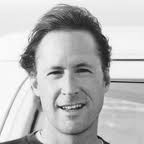
Showing posts with label Hampton Sides. Show all posts

Sunday, September 18, 2011

Hampton Sides Gripping Story of James Earl Ray Stalking Martin Luther King in "Hellhound on His Trail"

In his breathtaking book “Hellhound on His Trail: The Stalking of Martin Luther King, Jr. and the International Hunt for His Assassin”(Doubleday, $28), the journalist Hampton Sides recreates the path of the murderer James Earl Ray, from his escape from a Missouri prison in 1967 to his one-year odyssey hunting the civil rights leader.

With lush prose and meticulous historical research, Sides follows Ray as he travels from Mexico to Los Angeles and Birmingham, Alabama, in a strange route pursuing his quarry. He also draws a heartbreaking, dignified portrait of the flawed King, embattled on all sides as he has the realization that his life is doomed. Under the alias Eric Galt, Ray makes cunning moves and sloppy mistakes in his assassination of King in Memphis, Tennessee, on April 4, 1968. In a thrilling two-month manhunt, the FBI uses shoe leather and forensic science to help capture Ray in England. Sides’ book is devestating look at King’s murder and the still-open American wounds of racism and violence.

Sides, 48, is the author of the nonfiction bestsellers “Ghost Soldiers” and “Blood and Thunder.” He spoke with freelance writer Dylan Foley by telephone from his home in Santa Fe, New Mexico.

Q. You are from Memphis. Why did you decide to write about the King assassination?

A. I was only six years old at the time, but it was one of the first historical moments that I remember. There were real fears that there were going to be more riots in Memphis after King’s murder.

Q. You say in this book that you’ve used a novelist’s methods without a novelist’s license. What do you mean?

A. I wanted to have a tactile, atmospherical quality to the book, to bring in facts like architectural descriptions and things like the weather. There was a tornado watch the night before King’s assassination, as James Earl Ray entered Memphis. As a younger writer, I grew enamored of the “new journalists” like Joan Didion, who bring in as much novelistic details as possible.

Q. How would you describe James Earl Ray?

A. As an historical character, he was a gift that kept on giving, from his escape from prison in a bread truck to his dance lessons as a fugitive. He really wanted to be someone. He was smart in a certain way, but he was ill-educated and semiliterate. There was a history of mental illness. He took a lot of information in, but didn’t always connect the dots. What were Ray’s motivations? There was his racism, a possible bounty on King’s head and a desire to do big things. Ray desperately wanted to improve himself and was looking for fulfillment. He was not sure if he wanted to be a porn director or if he wanted to kill King.


(James Earl Ray's wanted poster)

Q. Could you describe Martin Luther King’s mindset in March and April 1968?

A. I subtitled the book "the stalking of Martin Luther King” because he was being stalked not just by James Earl Ray, but by history, fate and the FBI. There was dissent in black America over nonviolent protest. King was a nervous wreck. He was drinking too much and felt he was not worthy of leading the civil rights movement. There were infidelities and other vulnerabilities. By showing these weaknesses, I found I could identify with King and had more of a sense of loss over his murder. I did not want him to have a halo, but to be more human.


Q. How did the FBI handle the Ray manhunt?

A. It became one of the major themes in the book, the irony that the very agency that tried to smear and destroy King was given the job of finding his killer. I think there was a desperation by FBI Director Hoover, who despised King, to prove that his agency wasn’t dragging its feet. The detective work was amazing.

Wednesday, September 7, 2011

Hampton Sides on the Real Kit Carson and the Taking of the American Southwest


Sides tells how he came to see the man, not just a "genocidal maniac"

By Dylan Foley

In his glorious book, "Blood and Thunder: An Epic of the American West" (Doubleday, 480 pages, $27), journalist Hampton Sides tells a two-decade tragicomic story of how the West was truly won, from the United States' annexation of New Mexico and California in 1847 and the brutal suppression of the Navajo Indian tribes in 1863-1864. With the legendary trapper-soldier Kit Carson carrying most of the tale on his squat body, Sides writes history in its most vivid, gripping form, unveiling heroism, cold-blooded murder and folly.

"Blood and Thunder" starts with the 300 years of warfare between the Spanish and the Indians. Then Sides moves on to Carson, a short, ugly trapper from Missouri who was a legendary fighter and killing machine. In the mid-1840s, with President James Polk pursuing an aggressive policy of Manifest Destiny, Carson becomes the scout who helps the U.S. Army in its often comic campaign to conquer the northern Mexican territories of New Mexico and California.

Echoes in later American history

The tragedy of the book comes during the brutal suppression of the Navajo, on whom Carson carries out the U.S. Army's scorched-earth policy, burning crops and starving the semi-nomadic Navajos into submission.

In 2001, Sides had a major best seller with "Ghost Soldiers," an account of American POWs held by the Japanese during World War II. He was casting about for his next book project when he came across the "Long Walk" of the Navajo, where the vanquished American Indians were forcibly resettled by the U.S. Army.

"The story of a siege, a surrender and a long march sounded very familiar to me," said Sides, in a telephone interview from his home in Taos, referring to the parallels with the Bataan Death March in his previous book. "It was going to be almost the identical time frame, but then I asked the question, Kit Carson rounded up the Navajo, and who was Kit Carson? That question took three years and many thousands of miles to answer."

The life of Kit Carson becomes the dramatic center of the book. Using historical documents, including Carson's memoirs and contemporary accounts, Sides plunges into his biography and character.

Carson came from hardy Scottish-Irish stock; his father was killed when he was 7. Carson's fondest memories may have been of the time when he was living with his first wife, an Arapaho Indian, and trapping in what is now Colorado and Utah. Despite adopting Indian customs and buckskins, and living with various tribes, Carson participated in occasional massacres of Indians as retribution for murdered friends.

An evolving view of Kit Carson

Carson was a tactical genius, but was illiterate. His insecurities about his lack of schooling may have made him pliable in the hands of men from higher classes, including the colorful explorer John Fremont, who pushed the American campaign in California, and the generals of the U.S. Army. "Carson had a deference to men that were better-educated than him," said Sides. "It was also the realities of the U.S. Army of the day - you were given orders, and you carried them out."

As the book evolved, so did Sides' view of Carson. "I started with the belief that Carson was a genocidal maniac," said Sides, referring to the campaign against the Navajo, in which a third of the Navajo nation was wiped out due to starvation, forced march and four-year resettlement on a reservation that was more like a concentration camp.

"At the end of the book, my view of him was much more nuanced and multidimensional. I came to view him like a Mafia character, someone who would be interesting to meet, a colorful personality, but a man with a code that I didn't fully understand."

As the bloody battles of the Mexican-American War were raging in Mexico proper, a small group of American dragoons under Gen. Stephen Kearney was conquering New Mexico. Heroism, valor and foolishness sat side by side at the long-forgotten Battle of San Pasqual, where the courageous Americans were almost decimated by Mexican horsemen armed with lariats and lances. Carson's quick thinking and deadly aim stopped a total slaughter.

The tragic but effective "Long March"

Sides' swirling history includes a segment on the westernmost battle of the Civil War, where Confederate troops captured Albuquerque. The rebel troops were routed in part by Union volunteers from Denver, which included the fearsome Maj. John Milton Chivington, nicknamed the Fighting Parson, who marched 400 miles to stop the rebel advance through combat on the Santa Fe Trail. At the battle, the commander of the Colorado volunteers, Col. John Slough, was so despised that his troops tried to kill him by firing a howitzer at him.

Sides presents an evenhanded view of the relationship between the Navajo Indians and settlers. There were atrocities and scalping by both sides. Each side raided the other for slaves.

After the Army had wrested New Mexico and California from the Mexicans, Navajos continued raiding both Mexican and American settlements. Under the direction of Gen. James Carlton, Kit Carson was ordered to subdue the Navajo in New Mexico through destroying crops and starvation, forcing them to move from their ancestral lands to a distant, inhospitable reservation on the Pecos River.

"It was horrible," said Sides. "The campaign was thought to be one of the first modern, premeditated and concerted scorched-earth policies. Though destroying people's crops and villages is as old as warfare, this was the first example of a written U.S. Army policy. As horrible as it was, it worked. Carson did in a year what the Spanish couldn't do in 300 years, which was to force some kind of surrender. It was a tragic thing, hard to write and probably hard to read."

After writing two brilliantly received books about death marches and mass killings, Sides admitted that he's ready to move on to other subjects.

"For the next book, I'd like to interview people for it," said Sides. "The people in this book were really, really dead. I also want to do a book where there is no dysentery, no massacres and no beheadings. I am done with killings for a while."

Dylan Foley is a freelance writer in Brooklyn, N.Y.


(Originally published in the Denver Post on December 17, 2006)