Showing posts with label Love. Show all posts

Sunday, November 20, 2011

One of George Plimpton's Last Interviews on the Paris Review


The Denver Post

October 19, 2003


By Dylan Foley

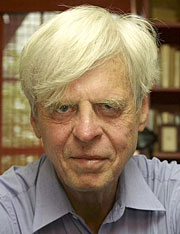
Writer and Paris Review editor George Plimpton died of a heart attack in his New York City apartment Sept. 25. He was 76. In a recent interview, Plimpton discussed the Paris Review anthology that celebrates the literary journal's 50th anniversary this year.

The Paris Review had its humble beginnings in 1953, when three young American writers in Paris - Peter Matthiessen, Plimpton and Harold L. Humes set up the magazine. The literary journal stood out because it published only fiction, poetry and the occasional interview with writers. The editors refused to publish literary criticism and, unlike the other journals, The Paris Review had an art director, and stood out with its vivid covers. E.M. Forster, the great British novelist, was one of the first writers interviewed.

In June, Plimpton published "The Paris Review Book of Heartbreak, Madness Sex, Love, Betrayal, Outsiders, Intoxication, War, Whimsy, Horrors, God, Death, Dinner, Baseball, Travels, The Art of Writing, and Everything Else in the World Since 1953" (Picador, 752 pages, $30). Behind that cumbersome title is a brilliant collection of fiction, poetry and interviews. There is fiction by Raymond Carver, Ha Jin and Lorrie Moore, and poetry by Adrienne Rich and Frank O'Hara. In the writer interviews, Truman Capote tells all, Toni Morrison discusses how to avoid writing boring sex scenes and William Faulkner talks about the writer's responsibility to art.

"I knew we had to do something this year, and I, of course, being a traditionalist, thought we'd do a 50th anniversary issue," said Plimpton in one of his last interviews from the study in his apartment overlooking the East River in New York City.

The Paris Review's twentysomething staff, however, had other ideas. They rebelled, for they wanted an anthology. "The staff thought that no one was going to go into a bookstore and pick out a 50th anniversary issue." Half in protest, he said, they devised the book's long-winded title."


Putting together the anthology was arduous work. "The editors went through Issue 1 of the Paris Review to Issue 160-whatever it is," Plimpton said. "I originally picked all the material, but not for the anthology. I'm terribly proud of them. The great joy was that they'd come to me with old material saying, 'What a story this is.' I remember reading Jay McInerney's beginning of his novel ("Bright Lights, Big City") in 1982 and saying 'In it goes."'

The Paris Review got its start in the heady days of post-war Paris. Plimpton, a young Harvard grad, had just finished his master's at Cambridge. "I went to Paris on Easter vacation in 1952 and bumped into Peter Matthiessen and Harold Humes. They talked about the magazine. I didn't know what I was going to do with my life then."


Plimpton moved to Paris. The financial help to start the magazine came from the three young men's parents. "The three families paid $500 each," noted Plimpton. "We didn't have it ourselves."

Paris in 1953 was a swirling cafe scene, a city packed with writers and artists. "It was exactly the kind of culture to start something like The Paris Review," said Plimpton." It was a petri dish. The G.I. Bill provided enough for you to live on, and Paris was inexpensive after the war. There was a whole raft of writers there - Richard Wright, Christopher Logue, Jimmy Baldwin. It was very vibrant, full of that élan."


The Paris Review went straight to writers, as opposed to writing about them. "The illustration I've used is rather than getting Critic A to write on Author B, we would go directly to Author B," said Plimpton.


The magazine scored a coup for its first issue with its interview with Forster, who had taught Plimpton at Cambridge. "He was a friend, because there was always that bond between student and don," Plimpton explained. "He hadn't finished a novel since 1924. He sat there and told us why - he had lost control of his characters. I think that set the tone for all the interviews that followed."


Over the last 50 years, The Paris Review interview has set the gold standard for literary interviews. "There were two things that happened," Plimpton said. "First, we were actually interested in the craft of writing, because we were writers ourselves. In the quintessential Paris Review interview, we'd ask, 'Do you use a pen or a typewriter?' We'd move on to inspiration and working hours. Nothing like this had been done before. Second, we made the writers part of the process. In almost all cases, we sent the interview back to the writer before publication. It was a collaborative effort.


The legions of writers who got their first big breaks through The Paris Review include Philip Roth, Jonathan Lethem and Jeffrey Eugenides. "We began publishing novellas like (Roth's) 'Goodbye Columbus.' People say that we discovered Philip Roth. Roth says that he was discovered by an obstetrician in Hoboken."

Over the years, Plimpton himself had become a symbol of the New York literary scene, with his patrician good looks and his trademark white hair. He wrote 30 books, including biographies of Edie Sedgewick and Truman Capote, and numerous anthologies on writing. He was also not above some good-natured self-satire - Plimpton mocked himself when he did a cameo on TV's "The Simpsons."


The journal has had rough times over the past 50 years. "The Paris Review came close to dying several times along the way," Plimpton said. "It was always financial. If it died, it would have killed part of me."


Things are very healthy now. "We started out with 5,000 subscribers," he said. "Now it is 15,000. The staff now is all in their 20s, which is great. They know a lot more than I do and they love the magazine. That's what makes it function."

For Plimpton, it was always about breaking new literary ground over making money. ``I work for nothing," Plimpton said. ``The only salvation to this job is when you read something that makes you jump out of your seat, like a recent story we published by Maile Meloy. That's enough."

Thursday, November 17, 2011

Toni Morrison on Her Novel "Love"


The Denver Post

November 16, 2003


By Dylan Foley


In her eighth novel, "Love" (Knopf, $23.95), Nobel laureate Toni Morrison chronicles the life of African-American resort owner Bill Cosey and the women that surround him.

This ironic title is a reference to the repressed emotions and shattered relationships in the story.

Morrison has achieved an epic tale of African-American life from segregation in the 1930s, where Cosey's East Coast hotel thrived by catering to middle-class African-Americans, to the civil rights movement and revolutionary violence in the 1960s, and finally to a ruined hotel of the 1990s.

At the heart of the book is Cosey's horrific marriage to his granddaughter Christine's 11-year-old playmate, Heed. The marriage destroys the platonic love affair of the two girls and poisons the soul of Cosey's family.

Morrison has written a beautiful, dark story of the devastation that Cosey wreaked on the women in his life. With the new novel, the 72-year-old author of "Sula" and "The Bluest Eye" has proved that she is at the top of her literary game.

"The girls had a pure love, because it was presexual," said Morrison of her characters during an interview from her Manhattan co-op. "That kind of love has no baggage, but the adults had other agendas."

Morrison's apartment is a glorious one-bedroom duplex in the 98-year-old former New York Police Department headquarters on the edge of the city's Chinatown. For a writer who has numerous ghosts populating her novels, including a murdered child in "Beloved," the palatial building is the perfect residence for her, radiating the spirits of corrupt police chiefs and mob killers.

Despite her regal bearing and impeccable credentials as a Pulitzer Prize winner and Princeton professor, Morrison gave a down-to-earth interview. Looking 15 years younger than she is, Morrison had a ready, conspiratorial laugh, whether receiving gossip over which feminist leader has had a facelift or the battles she had with her painter son while writing their children's books.

For Morrison, the novel started with an act of violence. "I started with the gang-rape," she said, a grueling scene where Romen, a young man waiting his turn for rape winds up rescuing the teenage victim. "The instinct for loving someone for teenagers, and maybe for other people, is repressed for being weak," said Morrison. "Romen is embarrassed by his inability to repress his instincts" to help the girl.

The narrative moves back and forth in time during a 60-year period. Heed and Christine's friendship is obliterated when Heed becomes Cosey's child bride. As a young woman, Christine dabbles in prostitution and revolution. The two former friends wind up living together as bitter old enemies, plotting against each other.

"They were forced into a silent or not-so-silent hatred, which for them was kind of expression of love," said Morrison. "One of the major problems with Heed and Christine is they continue to develop the lies they had as children, and they don't have any language until one is about to leave the other.

"What Cosey did was an outrage," said Morrison. "I had hoped that the readers would be appalled, but at the same time they would wonder if they had the right to be appalled," noting how society treats children today.

"These days, people are getting married older and having sex younger," she said. "Look at how sexualized children are now. We are responsible for sexualizing them - their clothes, their manners. Of course, we infantalize ourselves. I was wondering yesterday what it must feel to be a 10-year-old girl, where your grandmother has the same tight skin you do."

Morrison's novels have received critical acclaim since "The Bluest Eye," a story of rape and racism, came out in 1970. Winning the Pulitzer in 1987 for "Beloved" and the Nobel Prize for Literature in 1993 cemented her stellar literary profile. It was Oprah Winfrey championing Morrison's novels on her talk show, however, that turned Morrison's literary novels into big best sellers.

"Love" opens with a ghost narrator, a cook who doesn't know she is dead. Other ghosts pick up the story. This storytelling of ghost and horror tales has its roots in Morrison's youth in Loraine, Ohio, where she grew up in a working-class household.

"They all told stories - my mother, father, grandmother," said Morrison. "The children were called to tell stories - to remember them, to perform them, to change them, even."

The purpose of ghost stories or fairytales was to toughen up children for the outside, racist world. "The storytelling were survival stories, to make us, and the race, confront the terrible things that were happening," said Morrison, "to know that something evil was out there, but you could protect yourself through cunning and wit, by strength."

Six decades after her childhood, Morrison is now revisiting another set of tales. She and her artist son, Slade, have written several children's books based on the ancient Greek Aesop's Fables. "The morals at the end of the stories infuriated me," said Morrison. "We wanted to open them up, make them much hipper."

Working with family turned out to be harder than Morrison thought. "It was rough at the beginning," said Morrison with a laugh. "Slade's a painter, not a writer. On one hand, I'm his mother. On the other hand, I'm some public thingy that he can't relate to. It may have been intimidating."

Besides the apartment in Manhattan, Morrison keeps a home in Princeton, N.J., and a converted boathouse in upstate New York. ``I love that house on the Hudson," she said. ``That's my place." Morrison suspects that the three residences might fill a subconscious need. ``My sister says that because we moved from place to place growing up because of the rent, that is still in my head. I have a Depression child's mentality. I am always moving and taking in a new environment."